How to book enough time for nail removal and nail art
Build nail bookings around removal, art and the time your studio needs, with clear choices, a worked example and a practical menu checklist.
On this page
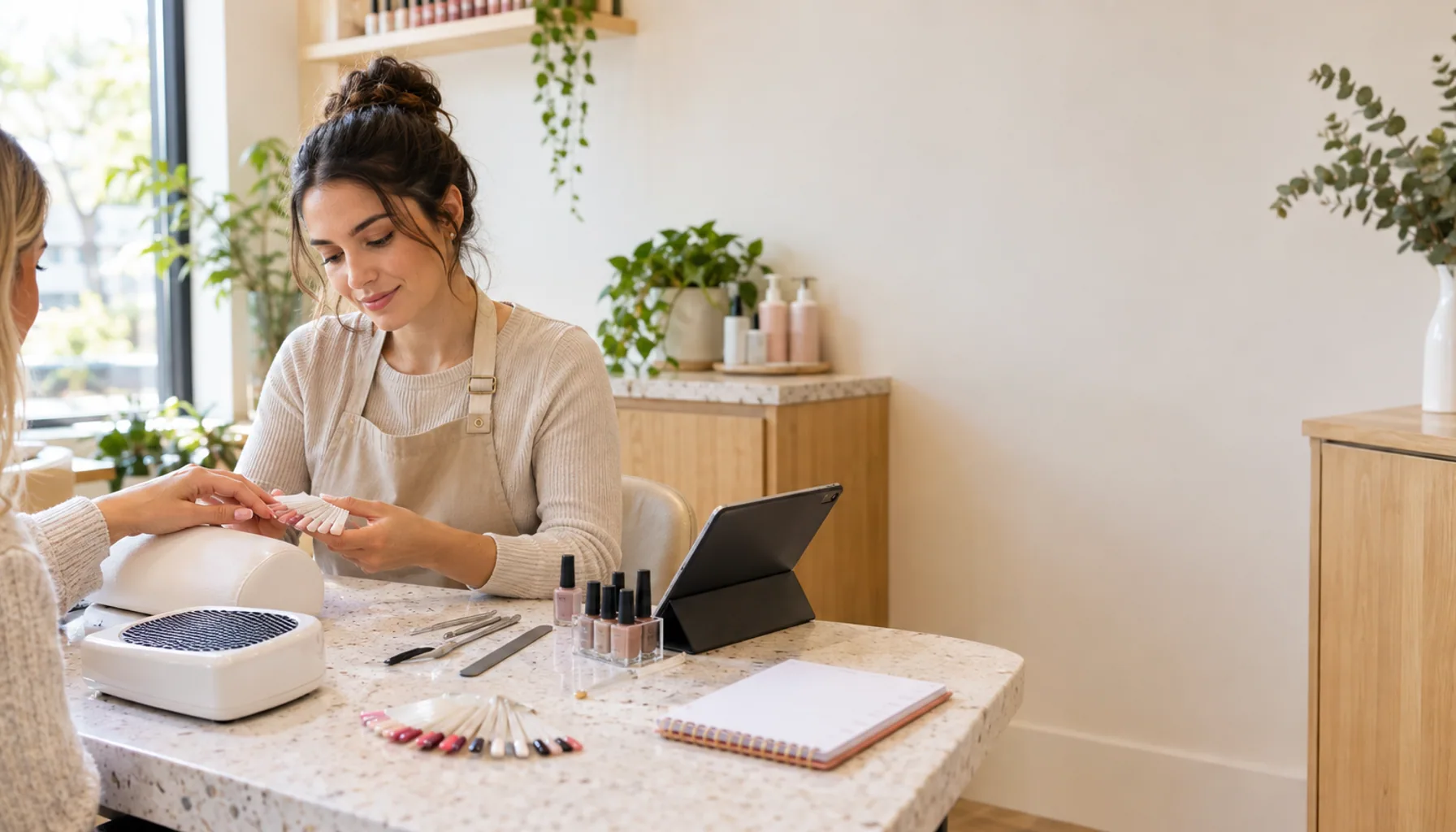
To book enough time for a nail appointment, establish the main service, whether existing product needs removing and the amount of nail art before offering appointment times. Give each bookable component a realistic duration. Send uncertain removal requests and complex designs to the team for assessment before agreeing the appointment.
A client choosing a builder gel manicure might arrive with bare nails, your studio's previous set or an unfamiliar product applied elsewhere. They might want one colour or detailed artwork across both hands. The same main service name can hide very different amounts of work.
For an independent nail tech, that difference lands directly in the next client's appointment. A useful booking menu makes the extra work visible early.
Start with what is already on the client's nails#
Separate the service the client wants from the starting point. A request for a fresh set doesn't tell you what needs to happen first.
Write the main service description so clients can see whether removal is included, selected separately or assessed before booking. Keep removal-only visits distinct from removal added to another service.
Then use a decision flow the client can follow:
- No existing product: choose the main service without adding removal, where that matches your description.
- Product applied by your studio: choose the relevant removal option if the client can identify it. Your team can review the previous visit when needed.
- Product applied elsewhere: explain which work your studio accepts and which listed removal option applies. Ask for the product name if known.
- Product or required service uncertain: ask the client to contact the team before selecting a treatment time.
Keep only the removal options your studio offers, with descriptions that reflect the work you accept.
“I don't know what's on my nails” needs a useful next step. Give the client your enquiry route and say what to send: a description of the existing set, any product details they know and clear current photos if helpful. A photo can support the conversation, but it cannot confirm the product or the work required.
Avoid making “no removal” the easiest answer for someone who is unsure. That uncertainty needs resolving before you promise a duration.
Define nail art by what each choice includes#
“Add nail art” leaves too much open. Clients need enough detail to recognise the option that matches their request.
For example, your menu could define “Small detail” as one design from a studio sample sheet on up to two nails. A separate “Full-set design” tier could cover a nominated design across all ten nails. These are example boundaries to adapt to your own work.
Use your own examples to make the boundaries clear. A label such as “Tier 2” means little without a description or reference work.
Keep these distinctions visible:
- The base finish included in the main service
- The extra design work covered by each art option
- Designs that need an enquiry and an agreed appointment length
For work outside those descriptions, ask for the inspiration image, how many nails the client wants decorated, and any requested changes to the reference. Your team can then confirm the service, artist, price and time. Don't ask the client to choose the closest option just to secure a slot.
A worked example of removal and art time#
The OpenChair nail salon page shows this illustrative configuration:
| Selected service | Duration | Price |
|---|---|---|
| Builder gel manicure | 60 minutes | A$82 |
| Existing product removal | 20 minutes | A$18 |
| Simple detail nail art | 15 minutes | A$12 |
| Total | 95 minutes | A$112 |
These are demonstration settings, not recommended prices or standard nail-service times. Each studio sets its own menu.
The calculation is straightforward: 60 + 20 + 15 = 95 minutes, or 1 hour 35 minutes. A 60-minute gap that fits the manicure alone does not fit this selection.
For a simple uninterrupted appointment starting at 10 am, the selected services would run to 11:35 am. Any separate turnover allowance would also need to fit before the next booking.
If removal is included in your main service's price and duration, don't add it again. The test is whether the complete appointment includes all the agreed work once.
Put booking choices before availability#
In OpenChair, a service can have linked Service Booking Options. The supported rules include Optional, Choose at least 1 and Choose exactly 1. Required choices appear before staff and time selection. Each selected option has its own price and duration, which contribute to the booking total and slot length.
Use a required choice when the client must resolve a booking decision. Keep genuinely optional work optional. Linking an option does not determine how long it should take; the studio supplies that duration.
An option can remain a standalone service where appropriate. Services configured as Booking option only stay out of the main service picker. That lets you distinguish a removal service clients can book on its own from an extra intended only for a larger appointment.
Availability also needs to match the people and space required. On Pro, configured resource requirements let OpenChair check physical capacity alongside eligible technicians. A free technician doesn't make a manicure table available if all suitable tables are occupied.
Check assignments for the full selection, especially when only some artists offer a particular design service.
Keep an internal timing checklist#
Client-facing descriptions should stay short. Behind them, keep a more detailed record of what each duration covers.
Before publishing a service or art tier, check:
- Starting point: which existing-product situations the booking covers
- Included work: what preparation, finish and design are already counted
- Extra work: which removal or art selections add time and price
- Artist: who performs that work and whether the allocated time is realistic
- Station: which table, chair or other configured resource is needed
- Turnover: where you have allowed for tasks between clients
- Uncertainty: which requests need review before a treatment slot is agreed
Compare those settings with completed appointments from your own studio. Record why a visit ran longer: an unselected removal, a design changed on arrival, an unclear tier or an unrealistic base duration. Those causes need different fixes.
A recurring selection mistake may call for clearer wording. Consistently longer delivery may call for more time. Keep unusual one-off requests separate so they don't silently redefine a standard service.
For a broader review of service costs and descriptions, use the salon service menu guide.
Test the booking as a new client#
Before sharing an updated menu, try four cases: a plain service on bare nails, your own previous set with removal, a clearly defined art request, and an unfamiliar set with a complex reference.
For the first three, check the selection, total price, duration and suitable times. For the uncertain request, check that the description gives a clear way to ask the team.
If a client changes the design after booking, review the appointment again. Confirm the revised scope and price, then check whether the extra work fits. A note about more art should prompt a timing review rather than leave the team expecting to squeeze it in.
Common questions#
How much time should a nail salon allow for removal?#
Use a duration based on the removal services your studio accepts and the time your team needs. There is no single allowance that suits every existing set. If the product or required work is unclear, assess the request before agreeing the treatment booking.
Should nail removal be included in the main service?#
Either approach can work. State whether it is included or selected separately, and make sure the appointment's total price and duration match that promise. Don't count the same removal twice.
How should clients book detailed nail art?#
Give clients clearly described options for work with a predictable scope. For a design outside those options, ask for a reference and a description, then agree the artist, service, price and appointment length before booking.
Can a reference photo determine the booking time?#
A reference helps explain the requested look. It doesn't establish everything about the existing product or the work involved. Staff still need to decide whether the request fits a listed service or needs an individual plan.
Start with one complete appointment#
Choose a service you book often and follow it from removal selection through nail art to an available time. Fix any missing choices before expanding the rest of the menu.
See OpenChair for nail salons for the booking workflow, then test it with the services, artists and stations your studio actually uses.